
Travel Consent Letter in Canada: Notarized Letters for Children Travelling
When a child travels without one or both parents, Canada recommends a signed consent letter witnessed by a notary public. This page explains who signs, what the letter should say, separated and sole decision-making situations, and how Civitas Law prepares and notarizes consent letters in Toronto.
30-minute consultation, $150 plus HST, paid when you book.
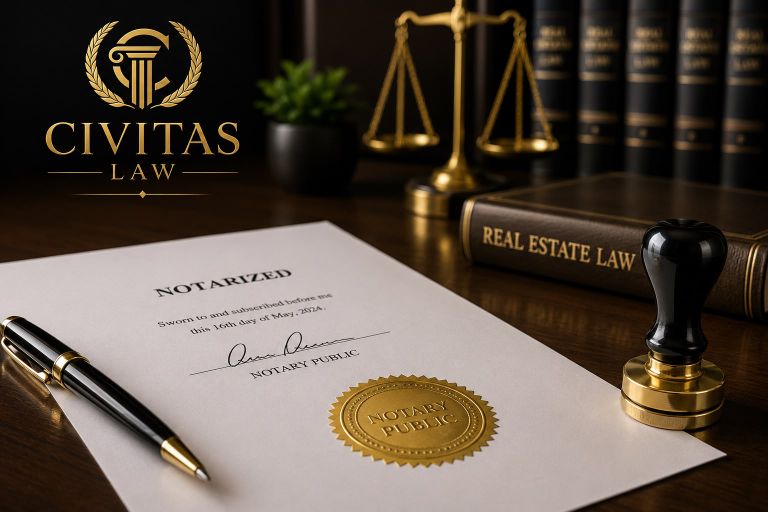
Consent letters for children travelling from Canada
Short answer: A consent letter is not legally required in Canada, but airlines, border officers and foreign immigration authorities can ask for one when a child under 19 travels without both parents or everyone with decision-making responsibility. Each parent or decision-maker who is not travelling should sign it, and the Government of Canada strongly recommends that a notary public witness the signature.
Civitas Law is a team of legal professionals under the leadership of lawyer Nasibeh Mehrpouyan, a lawyer and notary public in Toronto. We prepare and notarize travel consent letters, review letters that parents have drafted themselves from the federal sample, and explain what else to carry when a family situation is more complicated. We work in English, French, Farsi, Russian and Serbian at 4789 Yonge Street, Suite 402, at Yonge and Sheppard in North York.
The letter's purpose is simple: to show that the people who share responsibility for the child agree to the trip. Without it, a family can face questions, delays or, in the worst case, a refusal to board, leave or enter a country. A letter does not stop a child from being taken abroad without permission and does not ensure that a child will be returned, so where there is a real dispute about travel, the answer is a court order or legal advice rather than a letter.
For our other notary services, such as certified copies and affidavits, see our notary public page.
When should a child carry a consent letter?
As of November 2026, the federal guidance says any child under the age of 19 should carry a consent letter when travelling abroad without both parents or persons with decision-making responsibility. That covers more trips than most families expect:
- travelling with only one parent, even if the other parent joins for part of the trip;
- travelling with grandparents, other relatives or family friends;
- travelling with a school, sports, music, religious or other group;
- travelling alone, including as an airline unaccompanied minor;
- a teenager of 16 or older with an adult passport, since foreign authorities may still ask.
Leaving Canada, travellers are not routinely checked by a border officer the way they are on arrival, but airlines may ask to see the letter at check-in. Coming back, a Canada Border Services Agency officer may ask questions about the child and the adult travelling with them. Foreign immigration officers apply their own rules at the other end.
Who has to sign a travel consent letter?
The letter should be signed by every parent or other person with decision-making responsibility for the child who is not travelling. That includes parents who are married, common-law, separated or divorced. Since the 2021 changes to the federal Divorce Act, court orders use the term decision-making responsibility rather than custody, and the federal guidance follows that language.
- Both parents staying home (for example, a child travelling with grandparents): both sign.
- One parent travelling: the parent who stays behind signs.
- Child in temporary care: the letter should be signed by the appropriate child welfare agency representative.
- Parent living abroad: that parent should ideally sign. A consular officer at a Canadian government office abroad can witness the signature, and consular fees apply.
Each signer attends the notary appointment with valid government photo identification. If one parent lives in another city, that parent can sign a separate copy before a notary there, and the child carries both originals.
What should a travel consent letter include?
There is no official form, and the federal sample letter can be adapted. As a minimum, the letter should contain:
- the child's full name, date of birth and passport number;
- the names, addresses and phone numbers of the parents or persons with decision-making responsibility;
- the full name, address, contact information and relationship to the child of the adult travelling with them;
- the destination, the purpose of the trip and the exact departure and return dates;
- a clear statement that the signer consents to the trip.
The more detail, the better. Add flight numbers, the address where the child will stay and a contact number that will be answered while the child is away. Avoid open-ended wording such as "any travel at any time". A letter for one trip, with dates, is easier for an officer to accept. Carry the original signed letter: border officials may not accept a photocopy or a digital version, and the original is less likely to be questioned. The federal sample is available as a fillable PDF and a printable document on the Government of Canada's consent letter page.
Separated parents, court orders and a parent who has died
Family circumstances change what the child should carry:
- Sole decision-making responsibility: the federal guidance still recommends a letter from the other parent whenever possible or safe, plus a copy of the court order or parenting arrangement.
- Parenting order with travel terms: many Ontario orders set notice periods, require written consent or list permitted destinations. Read the order before you book, and carry a copy.
- Other parent cannot be reached: carry any relevant court order and consider legal advice before travelling.
- Other parent refuses or contact is unsafe: do not sign on their behalf. A family court can be asked to permit the travel. Our child custody and parenting and family law pages explain how that works.
- A parent has died: the surviving parent carries a copy of the death certificate. If the child travels without the surviving parent, the child carries the surviving parent's letter and a copy of the death certificate.
What does a notarized travel consent letter cost in Toronto?
| Service | Typical fee | Range published |
|---|---|---|
| Child travel consent letter, drafted and notarized | $78 | $50 to $180 |
| Notarizing one signature or document | $30 | $17 to $120 |
| Each additional signature or document, same visit | $22 | $15 to $80 |
| Mobile visit surcharge (on top of the notary fee) | $60 | $55 to $150 |
How we measured this: we reviewed the fees that 15 notary offices and law firms in Toronto and the GTA publish on their own websites, checked in November 2026. Figures are before HST unless stated. These are typical market fees, not Civitas Law's fees. Civitas Law tells you its fee in writing before any work starts, and any government fee is paid on top of the notary fee.
How Civitas Law can help
Affidavits and statutory declarations can also be commissioned by live video where Ontario's remote commissioning rules allow it, so you do not always need to come to the office. Mobile appointments at a home, hospital or office in Toronto can be arranged for an additional fee, which we confirm in writing before the visit.
Foreign entry and exit rules for children
A Canadian consent letter is accepted or refused under the rules of the country you are visiting. Some countries have their own forms or ask for the letter to be translated, notarized and authenticated. Some treat a child as their own citizen when a parent holds that country's citizenship, and then apply their own exit rules. Iran, for example, applies its own rules to children it considers Iranian citizens, including rules on a parent's permission for the child to leave the country, which a Canadian letter may not satisfy.
Before booking, read the entry and exit requirements in the Government of Canada's travel advice for the destination and, if needed, contact that country's embassy or consulate. If a foreign authority wants the letter apostilled or authenticated, it must first be notarized by an Ontario notary; our apostille page explains the next step at Official Documents Services. Check the airline's rules too, especially for unaccompanied minors.
How we prepare and notarize consent letters in Toronto
Book an appointment and tell us the destination, dates and who is travelling. Bring the letter unsigned if you have drafted it, or ask us to prepare it. At the appointment:
- we review the letter with each signer, in English, French, Farsi, Russian or Serbian;
- we check identification for every signer against the names in the letter;
- each signer signs in front of the notary, and the notary adds signature and seal;
- we suggest copies of court orders or certificates the child should carry.
Bring the child's passport details and any parenting order. If both parents cannot attend together, each can attend separately. Related pages: certified true copies of a passport or court order, affidavits and statutory declarations, and immigration documents. If the trip involves a disagreement between parents, a 30-minute consultation is $150 plus HST, paid when booking. Call (647) 271-1646 or book online.
Questions we hear often
General information, not legal advice. Every matter is different.
Is a travel consent letter required in Canada?
Does a travel consent letter need to be notarized in Canada?
Is there an official travel consent form for minors in Canada?
Do I need a consent letter if my child travels with one parent?
Who should sign a consent letter if parents are separated or divorced?
Do I need a consent letter if I have sole custody?
What age does a child need a travel consent letter in Canada?
Do grandparents need a consent letter to travel with a grandchild?
Does a child on a school trip need a consent letter?
What if the other parent lives outside Canada?
What if the other parent refuses to sign a travel consent letter?
How long is a travel consent letter valid?
Can a photocopy or a scanned consent letter be used?
Does a child need a consent letter to travel to the United States?
Should a consent letter be translated for travel abroad?
What does a child need to carry besides the consent letter?
Related services and guides
Notary public services
Notarization, commissioning and certified copies in Toronto.
Child custody and parenting
Parenting orders, decision-making and travel disputes.
Apostille in Toronto
When a notarized letter needs authentication for use abroad.
Certified true copies
Notarized copies of passports and court orders.
Talk to our team
Book a consultation online or call (647) 271-1646 (the phone is answered Monday to Friday, 9 am to 8 pm, and Saturday, 10 am to 6 pm). 30-minute consultation, $150 plus HST, paid when you book. Legal fees after that depend on the work involved, and we explain them in writing before you retain us.
Straightforward legal advice from a Toronto lawyer.
30-minute consultation, $150 plus HST, paid when you book. Personal injury matters start with a free 10-minute case review with the lawyer. Consultations are confidential.