
Theft and Fraud Lawyer in Toronto
Theft and fraud charges carry consequences well beyond the amount involved, from a criminal record to job and immigration problems. Our team defends theft, shoplifting, fraud and possession of stolen property charges in Toronto courts.
30-minute consultation, $150 plus HST, paid when you book.
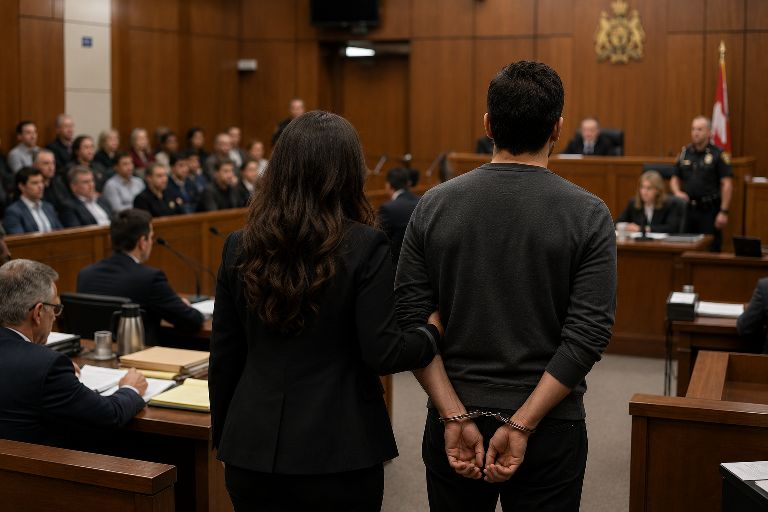
Theft and fraud charges
Short answer: Under the Criminal Code, theft under $5,000 can be prosecuted summarily or by indictment with a maximum of two years, while theft over $5,000 is indictable with a maximum of 10 years. Fraud over $5,000 carries a maximum of 14 years. For many first-time, lower-level charges, diversion or a discharge can avoid a criminal conviction.
Civitas Law is a team of legal professionals under the leadership of lawyer Nasibeh Mehrpouyan, defending people charged in Toronto and across the GTA in English, French, Farsi, Russian and Serbian.
Charges we defend
- Theft under $5,000, including shoplifting
- Theft over $5,000
- Fraud, including cheque, credit card, online and employment-related fraud
- Possession of property obtained by crime
- Identity theft and identity fraud
- Breach of trust and related charges
Common defences
- No intent to steal or defraud, for example a genuine mistake or a claim of right
- Identification issues, including poor quality video
- Charter breaches in the arrest, detention, search or statement
- Weaknesses in documents, financial records or how losses were calculated
Theft under $5,000 and shoplifting charges in Toronto
Theft under $5,000 is charged under s. 334(b) of the Criminal Code. It is a hybrid offence: the Crown may proceed by indictment, with a maximum of two years in jail, or summarily, with a maximum of two years less a day and a fine. In Toronto the Crown proceeds summarily in almost every shoplifting case, which also means the charge must be laid within twelve months of the alleged theft. Theft itself is defined in s. 322: taking or converting something, fraudulently and without colour of right, intending to deprive the owner of it. There is no lower limit; a few dollars is still theft under $5,000.
How a shoplifting case starts. Most begin with a store's loss prevention officer stopping you at the door. They may hold you until police arrive, ask you to sign a trespass notice banning you from the store, and hand over the video and the items. Police usually release you with an undertaking or an appearance notice that sets a first date at the Ontario Court of Justice and a date for fingerprints. You do not need to explain yourself to the store or to the officer.
Civil recovery letters. Weeks later, many people receive a letter from a law firm acting for the retailer demanding payment for the store's costs, even when the goods were recovered. This is a civil demand, not a court order or a fine, and paying it does not end or affect the criminal charge. Get advice before paying or replying; some letters ask you to admit the theft.
First offence outcomes. For a first charge involving a modest amount, the Toronto Crown will usually consider diversion: the charge is withdrawn after you complete something such as a donation, community service or a theft awareness program. Where diversion is not offered, a peace bond, an absolute discharge or a conditional discharge are the other ways to end the case without a conviction. Jail for a first shoplifting offence is rare; see the question below on going to jail for theft under $5,000.
Possession of property obtained by crime. People who did not take anything are sometimes charged under s. 354 with possessing stolen goods, for example after buying a phone or bicycle that turns out to be stolen. The Crown must prove you knew, or deliberately avoided knowing, that the property was stolen. Under $5,000 it is hybrid with a two-year maximum on indictment; over $5,000 it is indictable with a ten-year maximum under s. 355. A suspiciously low price, missing documents and quick resale are what the Crown points to, and a believable account of how you got the item is the usual answer.
Theft over $5,000 under s. 334 of the Criminal Code
When the value of what was taken is more than $5,000, the charge is theft over $5,000 under s. 334(a). It is a straight indictable offence with a maximum of ten years in prison, and because of that maximum you have a choice of court: a judge of the Ontario Court of Justice, or a judge of the Superior Court of Justice with or without a jury. The same section covers theft of a will or other testamentary instrument regardless of value.
The value is an element the Crown must prove. Where the evidence shows the goods were worth less, or where the value depends on contested appraisals, the charge can end up as theft under $5,000, which changes the maximum, the procedure and the realistic sentence. We look closely at how the complainant arrived at the figure: retail price against what the owner actually paid, the condition of used items, and whether unrelated losses were added in.
Typical theft over $5,000 cases in Toronto courts include:
- Employees accused of taking cash, inventory or equipment over a period of time, often discovered through an internal audit
- Contractors or agents who received deposits and are said to have kept them, which is sometimes charged as theft and sometimes as fraud
- Theft from a client, a family member or an estate by someone trusted to manage the money
- Theft of vehicles, which is now usually charged under the separate motor vehicle theft section, s. 333.1, and is covered on our property crime page
Sentencing depends less on the number than on the relationship. Where the person was in a position of trust, such as a bookkeeper, cashier, caregiver or manager, Ontario courts treat the breach of trust as a serious aggravating factor and jail is the usual starting point even for a first offender, with the length rising with the amount and how long it went on. Restitution, an early resolution, the circumstances that led to the taking, such as gambling or addiction, and genuine steps to address them all affect the outcome. A conditional discharge is legally possible for theft over $5,000 and can be argued for where the facts and the person support it, but it is not the norm in breach of trust cases. If someone has been arrested rather than released from the station, our bail hearings page explains the first steps.
Fraud over $5,000 and fraud under $5,000 (Criminal Code s. 380)
Fraud is charged under s. 380 of the Criminal Code. Fraud over $5,000 is indictable with a maximum of fourteen years under s. 380(1)(a). Fraud under $5,000 is hybrid under s. 380(1)(b), with a two-year maximum on indictment. Because the maximum for fraud over $5,000 is fourteen years, a discharge is not available for it; the lowest outcome on a conviction is a suspended sentence with probation. A discharge remains available for fraud under $5,000.
The elements of fraud. Courts describe fraud in two parts. The first is a dishonest act: deceit, a falsehood, or other fraudulent means, which covers conduct an ordinary person would call dishonest even without an outright lie. The second is deprivation: the act caused someone to lose money or property, or put it at risk, even if no loss finally happened. The Crown must also prove you knew what you were doing and that it could cause that loss or risk. Intending to repay is not a defence, although it matters at sentencing. A genuine belief that you were entitled to the money goes to the heart of the charge.
The one million dollar minimum. Where the total value of the frauds a person is convicted of is more than one million dollars, s. 380(1.1) sets a mandatory minimum of two years in prison. This minimum has been challenged under the Charter and, as of this writing, remains in force in Ontario. It applies to the total proven, so how the Crown adds up the counts matters, and because a minimum applies, a conditional sentence is not available.
Who investigates and how long it takes. Toronto Police fraud officers in each division and its financial crimes unit handle most Toronto cases, the Ontario Provincial Police investigate outside the city, and the RCMP take federal matters, often after a bank, insurer or employer has done its own review. Investigations run for months and often more than a year while police obtain records under production orders. Once a charge is laid, the case should finish within the time limits set in R. v. Jordan: eighteen months in the Ontario Court of Justice, thirty in the Superior Court.
Criminal charges and civil fraud claims are different. A civil fraud claim is a lawsuit for money, proven on a balance of probabilities, that can include orders freezing assets. A criminal charge is brought by the Crown, must be proven beyond a reasonable doubt, and can end in a record or jail. The two often run at the same time, and what you say in one can be used in the other. We defend the criminal charge; if you are also being sued, tell us so both are handled together.
Credit card fraud, identity theft and forged documents
A cluster of Criminal Code offences deals with cards, identities and documents, and they are often laid alongside a fraud count for the same events.
- Credit card offences, s. 342. Stealing a card, possessing a stolen or forged card, using a cancelled card, and using credit card data without authorization, including numbers skimmed or bought online, are each hybrid offences with a ten-year maximum on indictment. Possessing a skimmer or other device to copy card data is a separate offence under s. 342.01.
- Identity theft, s. 402.2. Obtaining or possessing another person's identity information, such as a social insurance number, a driver's licence number or banking details, intending to use it to commit an offence like fraud. The maximum is five years. The Crown must prove the intent; holding someone else's information for an innocent reason is not an offence.
- Identity fraud, s. 403. Pretending to be another person, living or dead, to gain an advantage, obtain property or cause a disadvantage to anyone. Hybrid, with a ten-year maximum. Using a relative's health card or signing a document in someone else's name falls here.
- Forgery, s. 366, and uttering a forged document, s. 368. Forgery is making a false document intending it to be used as genuine. Uttering is using, selling or possessing one knowing it is forged. Both are hybrid with a ten-year maximum. Common examples in Toronto courts are altered pay stubs and employment letters for a mortgage or lease, a forged reference, an altered transcript, and false immigration or travel documents, which can also bring charges under the Immigration and Refugee Protection Act.
These cases are built on records: card issuer logs, IP addresses, store video, delivery addresses and phone contents. The questions we ask are whether the records actually connect you to the transaction, whether more than one person had access to the account or device, and whether police followed the Charter when they searched your phone or obtained your data. Many people charged are themselves victims of identity theft whose names were used by others, and proving that often means obtaining records the police did not gather. For non-citizens these are crimes of dishonesty that can affect permanent residence, citizenship applications and sponsorship, so our immigration team is involved before any plea is considered.
Diversion, discharges and sentencing
For first-time, lower-value charges, the Crown may agree to diversion, where the charge is withdrawn after conditions such as community service, a donation or restitution are completed. A discharge, absolute or conditional, means no conviction is entered. For more serious cases, restitution, character letters and early resolution can affect the sentence. Non-citizens should get advice before any plea, because theft and fraud convictions can have immigration consequences.
Questions we hear often
General information, not legal advice. Every matter is different.
Will I get a criminal record for shoplifting?
What is the difference between theft and fraud?
Should I talk to the store or police about what happened?
Can theft charges affect my immigration status?
What if I return the property or pay it back?
Can you go to jail for theft under $5,000 in Canada?
Can you go to jail for fraud over $5,000?
Who investigates fraud in Ontario?
How long does a fraud investigation take?
How much does a theft or fraud lawyer cost in Toronto?
Related services and guides
Criminal defence
All criminal charges in Toronto courts.
Drug charges
Possession and trafficking.
Bail hearings
Getting released after an arrest.
سرقت و کلاهبرداری به فارسی
This page in Farsi.
Talk to our team
Book a consultation online or call (647) 271-1646 (the phone is answered 24/7). 30-minute consultation, $150 plus HST, paid when you book. Legal fees after that depend on the work involved, and we explain them in writing before you retain us.
Straightforward legal advice from a Toronto lawyer.
30-minute consultation, $150 plus HST, paid when you book. Personal injury matters start with a free 10-minute case review with the lawyer. Consultations are confidential.