
Youth Criminal Lawyer in Toronto
If your son or daughter has been charged, or you are a young person facing a charge yourself, this page explains how the Youth Criminal Justice Act works in Toronto. Our team defends young people aged 12 to 17 charged with any offence, and we work with parents from the first phone call.
30-minute consultation, $150 plus HST, paid when you book.
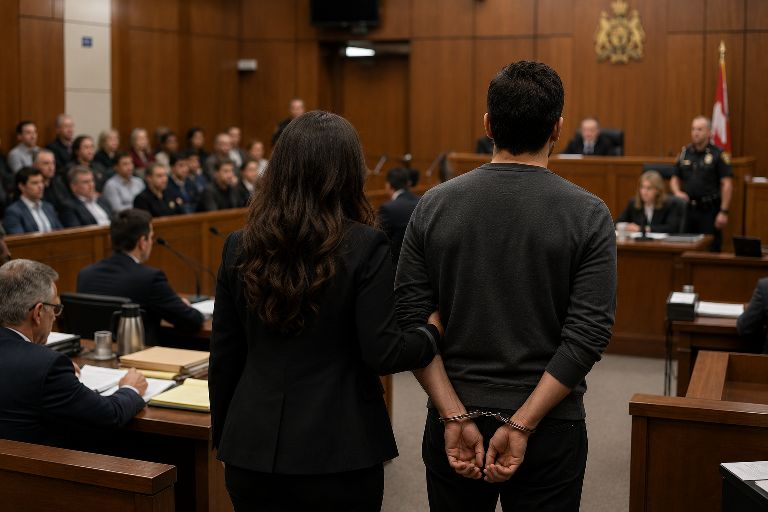
Youth criminal lawyer in Toronto: how youth charges work
Short answer: A young person aged 12 to 17 at the time of an alleged offence is dealt with under the Youth Criminal Justice Act, not the adult system. Youth court is less formal, sentences focus on rehabilitation, adult jail is not an option for a youth sentence, and most youth records close after a set period. Early advice protects those protections.
Civitas Law is a team of legal professionals under the leadership of lawyer Nasibeh Mehrpouyan, defending young people charged in Toronto and across the GTA, in English, French, Farsi, Russian and Serbian. People still call these young offender charges, after the law the Act replaced in 2003. If your child has been arrested and held, start with our bail hearings page and call us right away. This page is written for parents as much as for the young person.
Who the Youth Criminal Justice Act covers
The Youth Criminal Justice Act applies to anyone who was at least 12 and under 18 on the day of the alleged offence. Age at the time is what counts, so an 18 year old charged for something that happened at 16 is still in youth court. Children under 12 cannot be charged with a crime in Canada.
Youth cases in Toronto are heard in the youth court of the Ontario Court of Justice. The courtroom is open, but the young person's identity is protected by a publication ban, and a parent is expected to attend. The offences are the same ones adults face, from assault and shoplifting to drug possession, weapons and offences committed online; the difference is in the procedure, the sentences and the record.
At the police station: the right to a parent and a lawyer
The Act gives a young person stronger protections than an adult when police want a statement. Under s. 146, before taking a statement the officer must explain, in words the young person understands, that they do not have to say anything, that anything they say can be used in court, and that they have the right to speak to a lawyer and to a parent or another adult and to have that person present. These rights can only be given up clearly, usually in a recorded waiver. Statements taken without these steps are often ruled inadmissible.
Police must also notify a parent as soon as possible when a young person is arrested and held (s. 26). Our advice to parents: tell your child not to answer questions until a lawyer has spoken to them, and call us from the station. Most young people are released by police on an undertaking with conditions. If they are held for a bail hearing, the court must consider releasing them to a responsible person, often a parent, who undertakes to supervise them. See our sureties page.
Extrajudicial measures and sanctions
For a first offence that did not involve violence, the Act presumes that measures outside the court process are enough. These extrajudicial measures include a police warning, a formal caution or a referral to a community program, and they can end the matter before a charge is laid.
Extrajudicial sanctions are the next step up. The young person must accept responsibility for what happened, agree to the program and have been told of the right to a lawyer first. Typical sanctions in Toronto include counselling, community service, an apology or restitution. When the program is completed, the charge is withdrawn and there is no finding of guilt, and accepting responsibility cannot be used as an admission if the case proceeds. We help families decide whether a sanction is the right path and press the Crown to offer one where the facts support it.
Youth sentences and when an adult sentence can be sought
If a young person is found guilty, the court imposes a youth sentence under s. 42 of the Act. The options run from a reprimand and an absolute or conditional discharge, through a fine, community service, restitution and probation, to an intensive support and supervision program, deferred custody and supervision served in the community, and custody and supervision. Custody is the last resort, is served in a youth facility, and includes a period of supervision after release. The maximum youth sentence for most offences is two years, three years where an adult could receive life, and longer only for murder.
An adult sentence is the exception. The Crown can apply for one only if the young person was at least 14 at the time of the offence and an adult could be imprisoned for more than two years for it. For the most serious violent offences, such as murder, attempted murder, manslaughter and aggravated sexual assault, the Crown must consider applying and must tell the court if it decides not to. The Crown bears the burden of showing that a youth sentence would not be long enough. If an adult sentence is imposed, the publication ban is lifted and the record becomes an adult record.
Youth records: who sees them and when they close
A youth record is not an adult criminal record, but it is not invisible either. During what the Act calls the access period, police, the Crown and the courts can see it, and it will come up if the young person is charged again. The access period depends on the outcome: two years after agreeing to an extrajudicial sanction, one year after an absolute discharge, three years after a conditional discharge or after finishing a sentence for a summary conviction offence, and five years after finishing a sentence for an indictable offence. A new youth charge before the period ends restarts the clock. An adult conviction before it ends makes the youth record part of the adult record.
Once the access period ends, the record is sealed or destroyed and the young person is treated as never having been found guilty. So the answer to the common question, does a youth record show up on a record check, is: it can while the access period is running, and it should not after.
School, immigration and travel consequences of a youth charge
A youth charge reaches beyond the courtroom. Police and the Crown may share information with a school where safety or supervision of conditions requires it, and a school board can suspend or expel a student for conduct under Ontario's Education Act whether or not the court case is finished. A bail condition that bans contact with another student or attendance at a particular school can disrupt the school year within days, so we ask for conditions a young person can actually live with.
For families who are not Canadian citizens there is important protection: a youth sentence under the Act does not, on its own, make a young person inadmissible to Canada under immigration law. An adult sentence does, which is one more reason to resist adult sentence applications and to get immigration advice alongside the defence. Travel is different: an open charge or a condition not to leave Ontario will stop a school trip, so ask us before booking anything.
How our team defends young people in Toronto youth court
We meet the young person and the parents together, then speak with the young person alone, because the lawyer acts for the young person and their instructions come first. We obtain the disclosure, review any police statement against the s. 146 requirements, and look at how the arrest and any search were done under the Charter. Where the case suits it, we press for extrajudicial sanctions or a withdrawal; where it does not, we negotiate the sentence position with the Crown or run the trial. Legal Aid Ontario covers many young people charged with an offence, and the court can direct that a lawyer be appointed; ask us which option fits your family.
Questions we hear often
General information, not legal advice. Every matter is different.
What is the Youth Criminal Justice Act?
Does a youth record show up on a criminal record check?
Can a 17 year old be tried as an adult in Canada?
Can police question my child without a parent present?
Will a youth charge stop my child from going to university or getting a job?
Do young people get legal aid in Ontario?
How much does a youth criminal lawyer cost in Toronto?
Related services and guides
Criminal defence
All criminal charges in Toronto courts.
Bail hearings
Getting released after an arrest.
Theft and shoplifting
Common first charges for young people.
Talk to our team
Book a consultation online or call (647) 271-1646 (the phone is answered 24/7). 30-minute consultation, $150 plus HST, paid when you book. Legal fees after that depend on the work involved, and we explain them in writing before you retain us.
Straightforward legal advice from a Toronto lawyer.
30-minute consultation, $150 plus HST, paid when you book. Personal injury matters start with a free 10-minute case review with the lawyer. Consultations are confidential.