
Dangerous Driving Lawyer in Toronto
Dangerous driving is a Criminal Code charge, not a traffic ticket. A conviction brings a criminal record, a likely driving prohibition and, where someone was hurt or killed, the risk of a long jail sentence. Our team defends people charged with dangerous operation, flight from police and failure to stop in Toronto courts.
30-minute consultation, $150 plus HST, paid when you book.
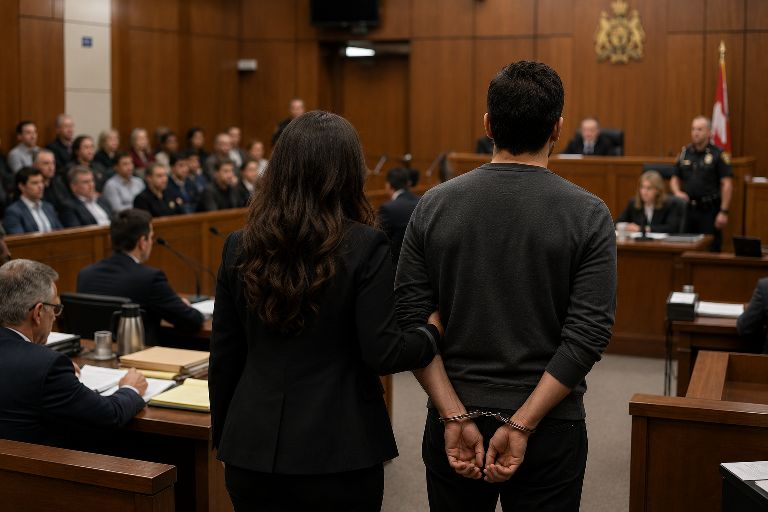
Dangerous driving charges in Toronto
Short answer: Dangerous operation under s. 320.13 of the Criminal Code is driving in a way that is dangerous to the public, judged against what a reasonable driver would do. It is a criminal offence with a criminal record, unlike careless or stunt driving under the Highway Traffic Act. The Crown must prove a marked departure from normal driving, and that is where most defences begin.
Civitas Law is a team of legal professionals under the leadership of lawyer Nasibeh Mehrpouyan, defending people charged with dangerous driving, flight from police and failure to stop after an accident in Toronto and across the GTA, in English, French, Farsi, Russian and Serbian. If someone is in custody after a serious collision, start with our bail hearings page. If alcohol or drugs are also alleged, see our impaired driving page, because the two charges are often laid together.
What is dangerous operation under s. 320.13 of the Criminal Code?
Section 320.13(1) makes it an offence to operate a conveyance in a manner that, having regard to all the circumstances, is dangerous to the public. The circumstances include the road, weather, traffic, visibility and what the driver knew or should have known.
Proving the offence has two parts. First, viewed objectively, was the driving dangerous? Speed well over the limit, racing, weaving through traffic, running red lights or using a phone while drifting across lanes are the common fact patterns. Second, the Supreme Court of Canada in Beatty and Roy requires a marked departure from the standard of care a reasonable person would observe in the same situation. A momentary lapse of attention is generally not enough.
Dangerous operation on its own is a hybrid offence. By indictment the maximum is ten years in jail; by summary conviction it is two years less a day.
Dangerous driving causing bodily harm or death
When the driving causes injury, the charge becomes dangerous operation causing bodily harm (s. 320.13(2)), a hybrid offence with a maximum of fourteen years by indictment. When it causes death, the charge is dangerous operation causing death (s. 320.13(3)), a straight indictable offence with a maximum of life imprisonment that can be tried in the Superior Court of Justice. Jail is the usual starting point on conviction.
Causation is its own battleground. The Crown must prove the dangerous driving was a significant contributing cause of the harm, not simply that a collision happened and someone was hurt. Another driver's conduct, a pedestrian stepping out, a mechanical failure or a medical event can all weaken that link. Reconstruction reports, event data recorder downloads and camera video become central, and the defence often needs its own engineer to test the Crown's reconstruction.
Careless driving vs dangerous driving: HTA ticket or criminal charge?
Three different laws can apply to the same bad driving:
- Careless driving (Highway Traffic Act s. 130). Driving without due care and attention or without reasonable consideration for others. A provincial offence tried in Provincial Offences Court, with a fine, demerit points and a possible licence suspension, but no criminal record. See our careless driving page.
- Stunt driving (Highway Traffic Act s. 172). A roadside licence suspension and vehicle impound, heavy fines and a further suspension on conviction, but still provincial and no criminal record. See our stunt driving page.
- Dangerous operation (Criminal Code s. 320.13). A criminal charge requiring a marked departure from reasonable driving, with a criminal record, possible jail, a Canada-wide driving prohibition and immigration consequences.
The line between careless and dangerous is the degree of fault: careless driving catches ordinary negligence, a mere departure from how a reasonable driver behaves, while dangerous driving requires a marked departure. The same high-speed collision can be charged either way, and one of the most common resolutions in Toronto is a withdrawal of the criminal charge in exchange for a plea to careless driving. That result is never automatic.
Flight from police and failure to stop after an accident
Two Criminal Code charges often travel with dangerous driving. Flight from a peace officer (s. 320.17) is operating a conveyance while pursued by police and failing, without reasonable excuse, to stop as soon as is reasonable. It is a hybrid offence with a ten-year maximum by indictment. The Crown must prove you knew you were being pursued by police; a short delay in finding a safe place to pull over is not flight.
Failure to stop after an accident (s. 320.16), which people call hit and run, is knowing you were in an accident with a person or another vehicle, or being reckless about it, and failing without reasonable excuse to stop, give your name and address and offer help to anyone injured. The basic offence carries a ten-year maximum; where bodily harm or death resulted, the maximums rise to fourteen years and life. Leaving the scene is also a provincial offence under s. 200 of the Highway Traffic Act.
Anything you say to police about the collision can be used against you, so speak to a lawyer before giving a statement. A collision report you are required to make under the Highway Traffic Act cannot be used to prove a criminal charge.
Penalties, driving prohibitions and licence consequences
A dangerous driving conviction brings several consequences at once:
- Sentence. For a first offence with no injury, outcomes range from a fine or a conditional discharge to probation or, less often, jail. Injury and death cases usually mean jail.
- Driving prohibition. The court can prohibit you from driving anywhere in Canada for a period set at sentencing, and in most dangerous driving cases it does.
- Ontario licence suspension. A Criminal Code driving conviction triggers an automatic suspension of your Ontario licence by the Ministry of Transportation. It runs alongside the court order and lasts longer with each repeat conviction.
- Insurance and record. Insurers treat you as high risk for years, and a criminal record affects employment, especially any job that involves driving, and travel to the United States.
- Immigration. Because dangerous operation carries a maximum sentence of ten years or more, a conviction is serious criminality under immigration law and can make a permanent resident or foreign national inadmissible regardless of the actual sentence. Our immigration law team can advise before any plea.
Commercial and rideshare drivers risk their livelihood during a prohibition, which we raise with the Crown and the court.
How dangerous driving charges are defended
From the first appearance in the Ontario Court of Justice, where you receive disclosure, our work follows a familiar path:
- Who was driving. Identification is the first question in cases built on a licence plate, a fleeing vehicle or a witness description.
- Was it a marked departure? We test the Crown's account against the Beatty standard: a momentary lapse, a reasonable reaction to something unexpected, or sustained risky driving?
- Explanations the law recognizes. A sudden and unforeseeable medical event, a mechanical failure you had no reason to expect, or an emergency that forced the manoeuvre.
- The evidence itself. Speed estimates, reconstruction assumptions, camera timestamps and witness reliability are all open to challenge, often with our own engineer.
- Charter issues. Statements taken at the scene without the right to counsel, phone searches for distraction evidence, and delay in bringing the case to trial.
- Resolution. Where the evidence supports it, we negotiate with the Crown for a withdrawal, a plea to a Highway Traffic Act offence such as careless driving, or a sentence that protects your licence and record as far as possible.
Questions we hear often
General information, not legal advice. Every matter is different.
Is dangerous driving a criminal offence in Canada?
What is the difference between careless driving and dangerous driving?
Is stunt driving a criminal offence in Ontario?
What is the penalty for dangerous driving causing death in Canada?
Will I lose my licence for dangerous driving in Ontario?
Can a dangerous driving charge be reduced to careless driving?
Does a dangerous driving conviction affect immigration status?
How much does a dangerous driving lawyer cost in Toronto?
Related services and guides
Criminal defence
All criminal charges in Toronto courts.
Impaired driving
DUI, over 80 and refusal charges.
Careless driving
Highway Traffic Act s. 130 charges and the usual plea-down.
Talk to our team
Book a consultation online or call (647) 271-1646 (the phone is answered 24/7). 30-minute consultation, $150 plus HST, paid when you book. Legal fees after that depend on the work involved, and we explain them in writing before you retain us.
Straightforward legal advice from a Toronto lawyer.
30-minute consultation, $150 plus HST, paid when you book. Personal injury matters start with a free 10-minute case review with the lawyer. Consultations are confidential.