
Direct, steady criminal defence for individuals across Toronto and the GTA, from your first call through resolution.
 Criminal Defence
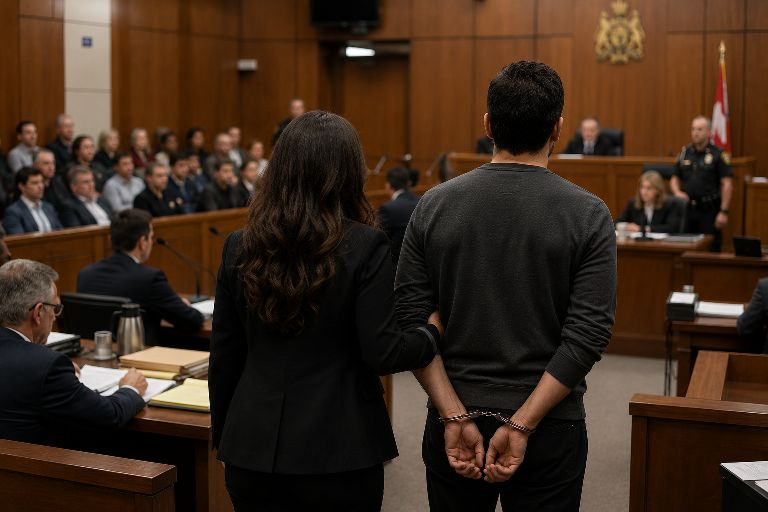
Criminal charges in Toronto are prosecuted under the federal Criminal Code of Canada, but the day-to-day process runs through Ontario's own court system, primarily the Ontario Court of Justice, with more serious indictable matters and jury trials proceeding in the Superior Court of Justice. Civitas Law represents clients at every stage of a criminal case, from the moment of arrest or a first call from police, through bail hearings, disclosure review, plea negotiations, trial, and appeal.
We work with individuals facing a wide range of charges and focus on giving clients a clear, honest picture of their options at every step.
Direct access to your lawyer at every stage, with clear, honest advice about your options.
We appear on short notice to argue for release and to help arrange suitable sureties and release plans.
We review the roadside stop, breath testing procedure, and any Charter issues that may affect an impaired driving or 'over 80' charge.
We defend clients facing domestic assault allegations, including matters involving no-contact conditions and family court overlap.
We represent clients charged with possession, trafficking, or production offences under the Controlled Drugs and Substances Act.
We defend simple and aggravated assault, uttering threats, and weapons or firearms charges.
We handle theft, fraud, and property offence charges from investigation through trial.
We represent young people charged under the Youth Criminal Justice Act, with attention to the distinct process and record protections that apply.
We assist clients who need to vary release conditions or who are facing a fail-to-comply charge.
Criminal offences are defined federally under the Criminal Code of Canada, but the courts that hear these cases in Toronto are provincial: most matters begin, and many resolve, in the Ontario Court of Justice, while indictable matters electing trial by judge and jury proceed in the Superior Court of Justice. Toronto's bail courts operate on a tight schedule, and a person arrested and denied release by police is generally entitled to a bail hearing within 24 hours.
Ontario's approach to bail has been shaped by Supreme Court of Canada guidance emphasizing the presumption of innocence and the least restrictive conditions necessary, which is a central argument in most bail hearings. Charter of Rights and Freedoms issues, particularly around search, detention, and the right to counsel, frequently arise in Toronto criminal matters and can affect whether evidence, such as a breath sample or a statement to police, is admissible at trial.
Plain-language answers to the questions we hear most. Every matter is different, so treat these as a starting point.
Share a few details about your situation and we will get back to you within one business day. Consultations are confidential.