
Drug Charges Lawyer in Toronto
Drug charges range from simple possession to trafficking and importing, and the consequences can include a criminal record and immigration problems. Our team defends drug charges in Toronto courts and looks first at how the evidence was obtained.
30-minute consultation, $150 plus HST, paid when you book.
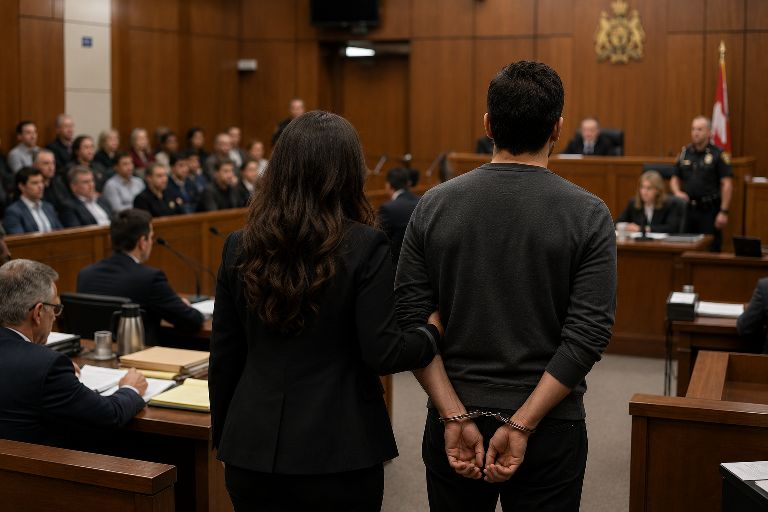
Drug charges in Canada
Short answer: Most drug offences are charged under the Controlled Drugs and Substances Act, and cannabis offences under the Cannabis Act. Since 2022, police and prosecutors must consider alternatives such as warnings or diversion for simple possession, and mandatory minimum sentences for drug offences have been repealed. Many cases turn on whether the search that found the drugs respected the Charter.
Civitas Law is a team of legal professionals under the leadership of lawyer Nasibeh Mehrpouyan, defending people charged in Toronto and across the GTA, in English, French, Farsi, Russian and Serbian. If someone is in custody, start with our bail hearings page and call us right away.
Common drug charges
- Possession. Having a controlled substance for personal use.
- Possession for the purpose of trafficking. Often alleged based on quantity, packaging, scales, cash or messages.
- Trafficking. Selling, giving, transporting or offering a controlled substance.
- Importing, exporting and production. More serious offences with higher penalties.
- Cannabis offences. In Ontario, adults 19 and over may possess up to 30 grams of dried cannabis in public. Possession over the limit, buying from an illegal source, or selling without a licence can be charged.
How drug charges are defended
- Unlawful search. Searches of a person, car, phone or home without proper grounds or a valid warrant can lead to evidence being excluded.
- Knowledge and control. The Crown must prove you knew about the drugs and had control over them, which is often disputed when drugs are found in a shared car or home.
- Continuity and testing. Problems with how the substance was handled and analyzed.
- Purpose of trafficking. Challenging the inference that drugs were for sale rather than personal use.
Trafficking and possession for the purpose of trafficking (CDSA s. 5)
Section 5(1) of the Controlled Drugs and Substances Act makes it an offence to traffic in a controlled substance, and s. 5(2) makes it an offence to possess one for the purpose of trafficking. The Act defines trafficking widely: to sell, administer, give, transfer, transport, send or deliver a substance, or to offer to do any of those things. Money does not have to change hands. Sharing with a friend or carrying a package for someone else can be charged as trafficking.
What the Crown must prove. For trafficking, two things: that you did one of the acts in the definition, and that you knew the substance was a controlled drug or were wilfully blind to it. For possession for the purpose, the Crown proves possession, meaning knowledge of the drugs and some control over them, and then proves that your purpose was to sell rather than to use. It must also prove what the substance was, usually with a certificate from a federal analyst.
The indicia police rely on. No quantity in the Act turns possession into trafficking. Police and prosecutors argue purpose from the surrounding facts: the amount compared with typical personal use, packaging in many small bags, digital scales, cutting agents, debt lists, cash in small bills, more than one phone, and messages that read like orders. Each item has an innocent explanation in the right case, and a heavy user can hold a large amount for personal use, so we test each piece rather than the overall impression.
Sentencing. The penalty depends on the schedule the drug sits in. For Schedule I substances such as cocaine, heroin, methamphetamine and fentanyl, both offences are indictable with a maximum of life imprisonment. Lower schedules carry lower maximums, and cannabis is dealt with under the Cannabis Act. In Toronto courts, trafficking in Schedule I drugs usually brings jail even for a first offender, with fentanyl treated more severely than other drugs. Small street-level sales by someone funding their own addiction sit at the low end, while commercial quantities, weapons, or involving young people push sentences into the penitentiary range, meaning two years or more.
Parliament added mandatory minimum jail terms for trafficking, importing and production in 2012. The Supreme Court of Canada struck one of them down in R. v. Lloyd in 2016, and Parliament repealed the rest in late 2022. Judges now set the sentence within the ordinary range, and a conditional sentence served in the community is legally available where the fit sentence is under two years, although for hard drugs it has to be argued for.
Importing and exporting drugs at Pearson and by mail (CDSA s. 6)
Importing or exporting a controlled substance, or possessing one for the purpose of exporting, is an offence under s. 6 of the Controlled Drugs and Substances Act. For Schedule I and II substances the maximum is life imprisonment, and courts treat importing as one of the most serious drug offences because it brings supply into the country. Most Toronto-area importing cases begin at Pearson airport and are heard in Brampton, because the airport is in Peel Region, or begin with a parcel at a mail or courier facility.
Airport cases. Travellers are examined by Canada Border Services Agency officers, who do not need the grounds a police officer needs to search a bag; a border examination is treated differently under the Charter than a search on the street. When drugs are found in luggage, the traveller is detained and the file is handed to police, usually the RCMP, and prosecuted by the federal Crown. The central question in most airport cases is knowledge. The Crown must prove you knew the drugs were in the bag, or deliberately avoided finding out. Couriers who were handed a suitcase by someone else, people who carried a package as a favour, and travellers whose bags were tampered with raise this defence, and the Crown answers it with evidence about who packed the bag, who paid for the ticket, the route taken, phone contents and the person's reaction at the counter. Wilful blindness is the usual battleground: the Crown argues you suspected and chose not to ask.
Mail and parcel cases. Packages are often opened by border officers at a mail processing centre. Police then arrange a controlled delivery: the parcel is delivered, and whoever signs for it or picks it up is arrested. Here the Crown has to prove that the person who accepted the package knew what was inside and intended to receive it, which is harder when the address is shared, the name on the label is wrong, or the parcel was taken in by someone who simply lives there. Tracking checks on a phone and earlier parcels to the same address are what the Crown usually points to.
Importing charges bring immigration consequences for non-citizens faster than almost any other charge, and the amounts involved often trigger a parallel seizure of cash or property. Our immigration team is consulted early for permanent residents and visa holders, and we review every step of the border examination for compliance with the Customs Act and the Charter.
Production charges and grow operations (CDSA s. 7)
Section 7 of the Controlled Drugs and Substances Act makes it an offence to produce a controlled substance. Production covers manufacturing, synthesizing, cultivating, propagating and harvesting, and offering to do any of those. For Schedule I drugs such as methamphetamine or fentanyl, production is indictable with a maximum of life imprisonment. Growing cannabis is no longer a CDSA offence: the Cannabis Act allows adults to grow up to four plants per household from legal seed, and growing more than that, growing for sale, or processing cannabis for sale without a licence is charged under the Cannabis Act, with its own maximum penalties.
Production cases tend to arise in three ways:
- Grow operations. A house, barn or industrial unit set up to grow cannabis beyond the legal limit, often discovered through hydro consumption records, a bypassed meter, a fire, a landlord's complaint or a neighbour's report. The key issue is usually who had control of the premises. Owners, tenants and people who merely visited are in very different positions, and the Crown has to prove each person's connection to the plants.
- Labs and pill presses. Fentanyl and methamphetamine cases involving a press, precursor chemicals or equipment. Possessing equipment or precursors with intent to produce is a separate offence under s. 7.1, and the Crown relies on forensic chemists and on fingerprints or DNA found on the equipment.
- Unlicensed cannabis processing. Making extracts, edibles or concentrates for sale without a licence, charged under the Cannabis Act.
Almost every production case starts with a search of a building, so the warrant is the first thing we examine: what the officer told the justice to get it, whether that information was accurate and current, and whether the search stayed within what the warrant allowed. Where a landlord or a utility gave police information, we look at how it was obtained. Sentencing turns on scale and sophistication, the type of substance, whether it was for sale, and the person's role, from the person who signed the lease to the person who tended plants for a wage. The repeal of the mandatory minimums in 2022 applies to production as it does to trafficking, so a judge sets the sentence on the facts of the case.
Section 8 Charter searches, wiretaps and confidential informants
Section 8 of the Charter protects everyone from unreasonable search and seizure, and in drug cases it decides more outcomes than any other issue. If the drugs were found through a search the court finds unreasonable, a judge can exclude them under s. 24(2), and without the drugs there is usually no case. The questions below cover phone and car searches; this section covers how larger drug investigations are built.
Warrants. Police who want to search a home for drugs apply to a justice with a sworn document, the information to obtain, under s. 11 of the CDSA or the Criminal Code. We obtain that document and test it: were the facts true, were they current, did the officer leave out anything that cut the other way, and would a properly informed justice still have issued the warrant. Where the answer is no, the search falls. The same review applies to production orders for phone records, bank records and location data.
Confidential informants. Many drug warrants rest on a tip from a source whose identity the law protects. The defence does not learn who the informant is, but the court still asks whether the tip was compelling, whether the source was credible, and whether police corroborated it before acting. A thin or unverified tip is a frequent weakness, and so is a tip that officers padded with their own assumptions.
Wiretaps and surveillance. In project cases run by Toronto Police or the RCMP, intercepted calls and messages are authorized by a Superior Court judge under Part VI of the Criminal Code, which requires police to show that other methods have been tried or are unlikely to work. Authorizations run for a set period and must be renewed, and the recordings are often the whole case. We review the authorization, the affidavit behind it, whether the interceptions stayed within its terms, and how recordings were transcribed and attributed to speakers. Tracking devices, cell tower records and cameras pointed at a home each have their own rules.
Other searches. Searches incident to arrest, sniffer dog searches, safety searches at a traffic stop and consent searches each depend on the officer having the right grounds at the right moment, and on notes and body-worn camera footage matching later testimony. Where a search breached the Charter, the court weighs how serious the breach was, how much it affected your privacy and whether the evidence is reliable before deciding to exclude it. Drug cases from larger investigations often come with conspiracy or criminal organization counts and seizures of cash or property, and we handle those together.
Records, immigration and travel
A conviction can affect employment, travel to the United States and, for anyone who is not a Canadian citizen, immigration status. Permanent residents and people on work or study permits should get advice before entering any plea. Diversion, withdrawal of charges or a discharge may be possible in suitable cases.
Questions we hear often
General information, not legal advice. Every matter is different.
Will I get a criminal record for simple possession?
Can police search my phone or car without a warrant?
Is cannabis legal in Ontario?
Can a drug charge affect my immigration status?
What happens at the first court date?
What is the sentence for drug trafficking in Ontario?
What is the minimum sentence for drug trafficking?
What amount of drugs is considered trafficking in Canada?
What two points must the Crown prove to obtain a conviction for trafficking?
How much does a drug charge lawyer cost in Toronto?
Related services and guides
Criminal defence
All criminal charges in Toronto courts.
Bail hearings
Getting released after an arrest.
Theft and fraud
Property and fraud charges.
اتهامات مواد مخدر به فارسی
This page in Farsi.
Talk to our team
Book a consultation online or call (647) 271-1646 (the phone is answered 24/7). 30-minute consultation, $150 plus HST, paid when you book. Legal fees after that depend on the work involved, and we explain them in writing before you retain us.
Straightforward legal advice from a Toronto lawyer.
30-minute consultation, $150 plus HST, paid when you book. Personal injury matters start with a free 10-minute case review with the lawyer. Consultations are confidential.