
Property Crime Lawyer in Toronto
Civitas Law defends people charged with property offences in Toronto: mischief under and over $5,000, break and enter, arson and motor vehicle theft. Whether the allegation is a broken phone during an argument or a break-in at a home, this page explains the charge, the realistic outcomes for a first offence and how we approach the defence.
30-minute consultation, $150 plus HST, paid when you book.
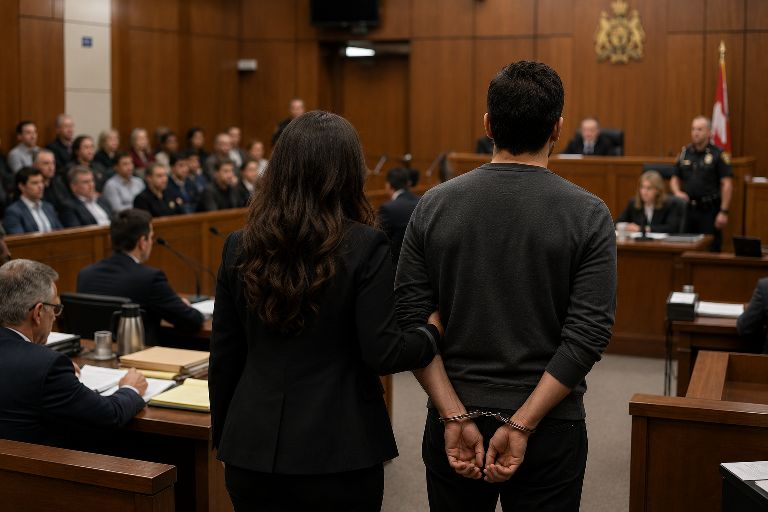
Property crime charges in Toronto: mischief, break and enter and arson
Short answer: Property crimes are offences against things, not people: damaging property (mischief, s. 430 of the Criminal Code), entering a place to commit a crime (break and enter, s. 348), setting fires (arson, s. 433 to 436) and stealing cars (s. 333.1). They range from a hybrid charge often resolved without a record to break and enter of a home, which carries a maximum of life imprisonment.
Civitas Law is a team of legal professionals under the leadership of lawyer Nasibeh Mehrpouyan, defending people charged with property offences in Toronto and across the GTA, in English, French, Farsi, Russian and Serbian. If someone is in custody after a break and enter, arson or vehicle theft arrest, start with our bail hearings page.
Mischief under $5,000 and over $5,000 (Criminal Code s. 430)
Mischief is the Criminal Code name for wilfully damaging property, making it useless or interfering with its lawful use (s. 430(1)). Keying a car or breaking a phone is mischief.
- Mischief under $5,000 (s. 430(4)). A hybrid offence with a maximum of two years by indictment; most cases proceed summarily in the Ontario Court of Justice.
- Mischief over $5,000 (s. 430(3)). Also hybrid, with a maximum of ten years by indictment. The value is the cost of the damage, not the value of the object.
- Mischief endangering life (s. 430(2)). Where the damage causes actual danger to life. Indictable, maximum life.
- Mischief to computer data (s. 430(1.1) and (5)). Destroying or altering data, making it useless or blocking lawful access to it. Maximum ten years.
Domestic mischief. Many Toronto mischief charges come from arguments at home. Property you partly own can still be the subject of a charge, the Crown treats the file as intimate partner violence, and release conditions usually bar you from contacting your partner or returning home.
Do first time offenders go to jail for mischief in Canada?
Usually not. A first offender charged with mischief under $5,000, where no one was hurt, is far more likely to end up with no criminal record than in jail. The realistic outcomes:
- Diversion. The Crown withdraws the charge once you complete a program, make a charitable donation, write an apology or do community service.
- Peace bond. The charge is withdrawn in exchange for a promise to keep the peace for up to twelve months. No conviction, no record.
- Restitution. Paying for the damage early is frequently the key to a withdrawal or a lighter outcome.
- Discharge. A finding of guilt without a conviction, removed from your record after one year (absolute) or three years (conditional).
- Conviction with a fine, probation or a suspended sentence, which creates a criminal record.
- Jail, reserved for repeat offenders, high-value or hate-motivated damage or mischief endangering life.
Mischief over $5,000 is treated more seriously, but a first offender with a restitution plan still has a real chance at a non-custodial result.
Break and enter (Criminal Code s. 348): dwelling house or other place
Section 348(1) makes it an offence to break and enter a place with intent to commit an indictable offence, to break and enter and commit one, or to break out after doing either. 'Break' does not mean smashing anything: opening an unlocked door, or walking in through an open one without permission, is enough.
- Dwelling house (s. 348(1)(d)). Breaking into a place where people live is a straight indictable offence with a maximum of life imprisonment. A home invasion, where the accused knew someone was home and used violence or threats, is an aggravating factor under s. 348.1. Jail is the usual result for an adult, and a conditional sentence is not available.
- Other place (s. 348(1)(e)). Breaking into a store, office or storage unit is a hybrid offence with a maximum of ten years by indictment. A first offender can sometimes avoid custody.
- Break and enter with intent. Under s. 348(2), proof that you broke in is itself evidence of intent to commit an indictable offence unless there is evidence to the contrary, so your explanation for being there matters a great deal.
- Related charges: attempted break and enter, being unlawfully in a dwelling house (s. 349), and possession of break-in instruments (s. 351(1)).
Arson charges in Canada (Criminal Code s. 433 to 436)
Arson is intentionally or recklessly causing damage by fire or explosion. The Criminal Code grades it by the risk created and who owned the property.
- Disregard for human life (s. 433). Setting a fire knowing the property is occupied, or causing bodily harm. Indictable, maximum life.
- Damage to property (s. 434). Fire or explosion damaging property not wholly your own. Indictable, maximum fourteen years.
- Own property (s. 434.1). Where the fire seriously threatens the health, safety or property of someone else. Indictable, maximum fourteen years.
- Fraudulent purpose (s. 435). Setting a fire to collect insurance; holding or applying for insurance on the property is itself evidence the Crown can rely on. Indictable, maximum ten years.
- By negligence (s. 436). Where an owner or person in control fails to take proper steps to prevent or control a fire. Hybrid, maximum five years.
Arson prosecutions depend on fire investigation opinion about where the fire started and whether it was set. That opinion can be tested, and the step from 'this fire was set' to 'this person set it' usually rests on circumstantial evidence. What you say to an insurance adjuster can reach the Crown.
Motor vehicle theft (s. 333.1) and possession of stolen property
Section 333.1 of the Criminal Code makes theft of a motor vehicle a hybrid offence with a maximum of ten years by indictment and a mandatory minimum jail term for a third or later conviction when the Crown proceeds by indictment.
- Possession of property obtained by crime (s. 354). The most common charge when a person is found in or near a stolen car. The Crown must prove you knew the car was stolen or were wilfully blind to it.
- Taking a motor vehicle without consent (s. 335). Joyriding, with no intent to keep the car; a summary offence.
The defence usually centres on knowledge: a buyer, borrower or passenger may have had no idea the car was stolen.
Defences to property crime charges: colour of right, intent and identity
- Colour of right. Under s. 429(2), an honest belief that the property was yours to deal with, or that you had permission, is a defence to mischief and arson even if you were wrong.
- No wilfulness. Mischief requires that the damage was caused intentionally or recklessly. Accidental damage during a struggle is often a route to a withdrawal.
- No intent to commit an offence inside. For break and enter, an honest explanation for being in a place answers the presumption of intent.
- Identification. Fingerprints and DNA show contact, not timing; grainy video shows a figure, not a face.
- Charter breaches. Entering a home or car without a warrant or valid grounds, or questioning a person before they have spoken to a lawyer, can lead to evidence being excluded.
- Value. Whether the damage really exceeded $5,000 changes the charge, so we challenge inflated repair estimates.
What happens after a property crime arrest in Toronto
Release. For mischief and many non-residential break-ins, police can release you from the station on an undertaking with conditions. For a break-in of a home, arson or where you have a record, expect a bail hearing the next day. Breaking a condition is a new charge, as our breach of bail conditions page explains.
First appearance and disclosure. Your first date in the Ontario Court of Justice is administrative: you receive initial disclosure and the case is adjourned without a plea. We then review the file and ask the Crown for its position on resolution.
Record and immigration. A conviction shows on employment checks and at the United States border, and because most of these offences carry ten-year or greater maximums they count as serious criminality for immigration purposes, so a permanent or temporary resident should speak to our immigration team before any plea.
Our approach. We identify early whether yours is a diversion case, a restitution case or a trial case, read the whole file, raise the Charter and intent issues that apply, and deal with the Crown in writing.
Questions we hear often
General information, not legal advice. Every matter is different.
Is mischief a criminal offence in Canada?
What happens if you are found guilty of vandalism?
What are the four types of vandalism?
What is the punishment for break and enter in Canada?
Can I be charged with mischief for damaging my own property?
How much does a property crime lawyer cost in Toronto?
Related services and guides
Criminal defence
All criminal charges in Toronto courts.
Bail hearings
Getting released after an arrest.
Theft and fraud
Theft under and over $5,000, shoplifting and fraud.
Talk to our team
Book a consultation online or call (647) 271-1646 (the phone is answered 24/7). 30-minute consultation, $150 plus HST, paid when you book. Legal fees after that depend on the work involved, and we explain them in writing before you retain us.
Straightforward legal advice from a Toronto lawyer.
30-minute consultation, $150 plus HST, paid when you book. Personal injury matters start with a free 10-minute case review with the lawyer. Consultations are confidential.