
Record Suspension (Pardon) in Toronto
A record suspension, formerly called a pardon, is ordered by the Parole Board of Canada and keeps a criminal conviction separate from other criminal records. This page explains who is eligible, the waiting periods, the $50 Parole Board fee as of November 2026, the documents you need, what a record suspension does and does not do, and how discharges and withdrawn charges are treated.
30-minute consultation, $150 plus HST, paid when you book.
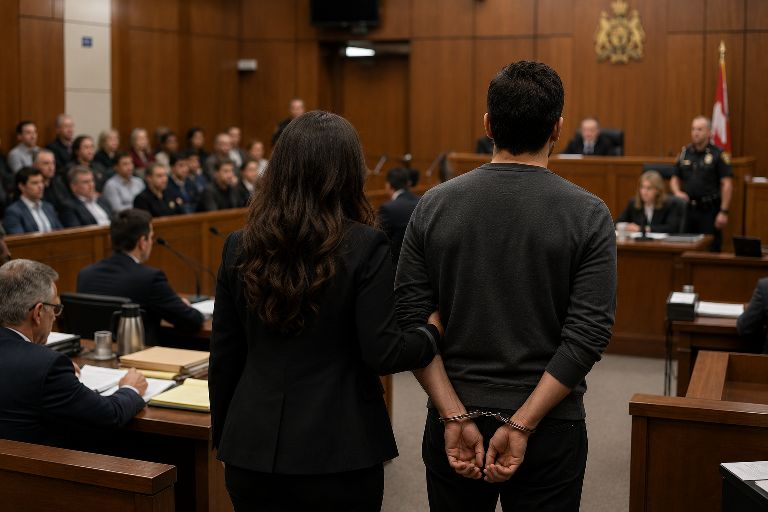
Criminal record suspensions in Ontario
Short answer: A record suspension, the term that replaced pardon in 2012, is an order of the Parole Board of Canada under the Criminal Records Act. Once ordered, the conviction is kept separate from other criminal records and removed from the national police database. You can apply 5 years after completing your whole sentence for a summary conviction offence, or 10 years for an offence prosecuted by indictment. The Parole Board's application fee is $50 as of November 2026.
Civitas Law is a team of legal professionals under the leadership of lawyer Nasibeh Mehrpouyan, practising criminal law in Toronto in English, French, Farsi, Russian and Serbian. Civitas Law prepares and files record suspension applications with the Parole Board of Canada: we check eligibility and the waiting period, gather the court, police and fingerprint records the Board requires, complete the forms and follow the file until a decision. People often come to us years after a case ended, when a job offer, a volunteer position, a professional licence or a trip depends on what a record check shows. This page explains the record suspension rules as they stand in November 2026, how discharges and withdrawn charges are treated differently, and what a record suspension can and cannot do.
The official rules, forms and guide are on the Parole Board of Canada record suspension pages, and the law is in the Criminal Records Act. You can apply on your own; no lawyer or private company is required by the Parole Board. Legal advice is most useful when the eligibility date, the method of trial, an old discharge or immigration status is unclear.
Who is eligible for a record suspension?
You may apply if you were convicted of an offence under a federal law of Canada as an adult, or were convicted abroad and transferred to Canada to serve the sentence. You must have completed every part of every sentence before the waiting period starts, including:
- any jail term, conditional sentence, parole or statutory release;
- any probation order;
- all fines, costs, restitution and compensation orders. According to the Parole Board, mandatory victim surcharges imposed between October 24, 2013 and December 13, 2018 do not delay the start of the waiting period.
A weapons prohibition or a driving prohibition does not need to have expired before the waiting period begins.
Two groups are not eligible where the first offence was committed on or after March 13, 2012: people convicted of more than three offences prosecuted by indictment, each with a sentence of two years or more, and people convicted of a Schedule 1 offence (sexual offences involving children) unless they meet the narrow exception in s. 4(3) of the Criminal Records Act. The exception requires the Board to be satisfied that the person was not in a position of trust or authority over the victim, did not use or threaten violence, intimidation or coercion, and was less than five years older than the victim.
How long do you have to wait to apply for a pardon in Canada?
The waiting period is set by s. 4(1) of the Criminal Records Act and depends on when the first offence was committed and on whether it was prosecuted summarily or by indictment. For offences committed on or after March 13, 2012, which covers most people applying today:
- Summary conviction offence: 5 years after the whole sentence is complete.
- Offence prosecuted by indictment: 10 years after the whole sentence is complete.
Older offences have shorter periods. For offences committed before June 29, 2010, the Parole Board applies 3 years for summary offences and 5 years for indictable offences. Offences between June 29, 2010 and March 12, 2012 have a mixed scheme of 3, 5 or 10 years depending on the offence. The Board's eligibility page sets out each category.
Many offences are hybrid, so the method of trial matters. If the court cannot confirm whether the Crown proceeded summarily or by indictment, the Parole Board applies the longest waiting period. Court records from the sentencing courthouse usually answer the question.
Cannabis possession record suspensions
People convicted only of simple possession of cannabis, listed in Schedule 3 of the Criminal Records Act, can use an expedited process. There is no waiting period once any sentence other than a fine or victim surcharge has expired, and the Board must order the record suspension if the other conditions are met. Details are on the Parole Board's cannabis record suspensions page.
Discharges, withdrawn charges and youth records
Not every criminal case leaves a conviction, and a record suspension is only for convictions.
- Absolute or conditional discharge. A discharge is a finding of guilt without a conviction. Under s. 6.1 of the Criminal Records Act, a discharge record is not to be disclosed after one year for an absolute discharge or three years after a conditional discharge, and it is removed from the national police database. The Parole Board says no application is needed if you received only discharges. The RCMP can confirm the status of your record.
- Withdrawn, stayed or dismissed charges, peace bonds and acquittals. None of these is a conviction, so there is nothing for the Parole Board to suspend. Police may still keep records of the charge, fingerprints and photographs. You can ask the police service that laid the charge, such as Toronto Police Service, to destroy or return them once the case is over.
- Youth records. Findings of guilt in youth court are governed by the Youth Criminal Justice Act and are destroyed or archived when the access period ends, without any application. Our youth criminal defence page explains the periods.
In Ontario, the Police Record Checks Reform Act, 2015 also limits what police can release on a criminal record check or a criminal record and judicial matters check. Non-conviction information is generally disclosed only on a vulnerable sector check, and only in limited circumstances.
How to apply for a record suspension
The Parole Board's application guide lists the documents in order. As of November 2026, they are:
- the completed Record Suspension Application Form;
- your criminal record from the RCMP, based on fingerprints submitted electronically and marked as being for a record suspension, plus proof of conviction for any conviction missing from it;
- a Court Information Form completed by each court that sentenced you, showing the method of trial and the date of final payment of any fine, surcharge, restitution or compensation;
- a local police records check from each police service where you lived in the past five years, valid for 12 months from the date it was issued;
- a copy of a valid identity document;
- the Measurable Benefit and Sustained Rehabilitation form, required for an offence committed on or after June 29, 2010;
- a Schedule 1 exception form and a military conduct sheet, only if they apply;
- the signed consent and privacy form, valid for 12 months; and
- the processing fee.
Applications are mailed to the Clemency and Record Suspension Division in Ottawa. Incomplete or ineligible applications are returned with a letter explaining why, so it pays to check every date before sending. Toronto courthouses can take time to complete court information forms, especially for older files, so start with the courts and the fingerprints.
How the Parole Board decides and how long it takes
Under s. 4.1 of the Criminal Records Act, the Board may order a record suspension if you were of good conduct during the waiting period and have no new federal conviction. For an offence prosecuted by indictment, you must also show that the record suspension would give you a measurable benefit, such as employment, education or housing, and would support your rehabilitation, and that ordering it would not bring the administration of justice into disrepute.
The Parole Board's service standard, as of November 2026, is to decide applications within 6 months of acceptance for summary offences and within 12 months for indictable offences. Where the Board proposes to refuse, it writes to the applicant, who can make written submissions, and those files can take up to 24 months.
What does a record suspension cost in Toronto?
Criminal defence fees depend on the charge, the volume of disclosure, whether there is a bail hearing, how many court appearances are needed and whether the case goes to trial. Too few Toronto firms publish a fee for this type of work to give a reliable market figure, so we do not show one. The Parole Board of Canada charges its own application fee (currently $50), paid directly to the Board; check the Parole Board record suspension page for the current amount. For context, the ranges Ontario firms do publish for other charges are below.
| Service | Typical fee | Range published |
|---|---|---|
| Impaired driving or over 80, first offence, resolved without trial | $5,900 | $3,500 to $15,000 |
| Simple assault, mischief or theft under $5,000 | $5,750 | $1,500 to $15,000 |
| Hourly rate, criminal defence | about $410 an hour | $75 to $800 an hour |
How we measured this: we reviewed fee ranges that Ontario criminal defence firms publish on their own websites, checked in November 2026. These are typical market ranges, not Civitas Law's fees, and they usually exclude HST and disbursements. Only a few firms publish criminal fees, so a figure is shown only where at least three firms published one. Civitas Law explains its fee in writing before you retain us. The 30-minute consultation is $150 plus HST, paid when you book.
What a record suspension does and does not do
- It removes the record from the Canadian Police Information Centre (CPIC) database, so a CPIC search will not show the conviction or the record suspension.
- It does not erase the conviction. The record is kept separately and can be disclosed only with the approval of the Minister of Public Safety in limited cases.
- Sexual offence records are flagged. If you were convicted of certain sexual offences, a vulnerable sector check can still reveal the suspended record.
- Most disqualifications under federal laws are removed, which can matter for some licences and federal jobs.
- Provincial and civil matters are separate. A record suspension does not change driving prohibitions or civil judgments.
A record suspension can be revoked or cease to have effect if you are later convicted of a new indictable offence, or in some cases a summary offence, if you are no longer of good conduct, or if the application contained false or misleading information.
Record suspensions and travel to the United States
A Canadian record suspension does not bind other countries. The Parole Board explains that foreign agencies lose access to the suspended record once it is ordered, but a United States agency that already saw the record may have kept it. If you have a conviction, a US entry waiver may still be needed, and the Parole Board suggests contacting the port of entry before travelling. Always answer border officers honestly; a false answer creates a separate problem. A US waiver is a US process, and advice on it comes from a US immigration lawyer.
For people who are not Canadian citizens, a record suspension in force also matters for Canadian immigration: the Immigration and Refugee Protection Act says a conviction covered by a record suspension does not create criminal inadmissibility. See our page on the immigration consequences of criminal charges.
Getting advice about your criminal record
If you are not sure whether you are eligible, when your waiting period ends, or whether a discharge is still showing, our team can review your situation at a paid consultation, $150 plus HST for 30 minutes, paid when booking. Bring your RCMP record or any court papers you have. You can book a consultation online or call (647) 271-1646. Our office is at 4789 Yonge Street, Suite 402, Toronto, at Yonge and Sheppard in North York. If you are facing a new charge, start with our criminal defence page, since the outcome of that case decides what will be on your record.
Be cautious of companies that charge large amounts to submit applications or promise approval within a set time. The Parole Board warns applicants about fraud on its protect yourself from fraud page, and only the Board can decide an application.
Questions we hear often
General information, not legal advice. Every matter is different.
What is a record suspension in Canada?
Is a record suspension the same as a pardon?
How much does a record suspension cost in Canada?
How long do I have to wait to apply for a pardon in Canada?
How long does it take to get a record suspension?
Who is not eligible for a record suspension?
Do I need a record suspension for a discharge?
How long does a criminal record stay in Canada?
Does a withdrawn charge show up on a background check?
Can I travel to the United States after a record suspension?
Does a record suspension help with immigration?
Can a record suspension be revoked?
Will a record suspension show on a vulnerable sector check?
Can I apply for a record suspension myself?
What is the measurable benefit requirement?
What documents do I need for a record suspension?
Does a record suspension delete my criminal record?
Do unpaid fines stop me from getting a record suspension?
Related services and guides
Criminal defence
All criminal charges in Toronto courts.
Immigration consequences
How a conviction can affect PR and visa status.
Youth criminal defence
Youth records and the access periods.
Criminal appeals
Appealing a conviction or sentence in Ontario.
Peace bonds
A resolution that does not create a criminal record.
Talk to our team
Book a consultation online or call (647) 271-1646 (the phone is answered 24/7). 30-minute consultation, $150 plus HST, paid when you book. Legal fees after that depend on the work involved, and we explain them in writing before you retain us.
Straightforward legal advice from a Toronto lawyer.
30-minute consultation, $150 plus HST, paid when you book. Personal injury matters start with a free 10-minute case review with the lawyer. Consultations are confidential.